Description:
Finding description of reconstructed parts:
I. Gabriel, T. Kempke, Starigard/Oldenburg – Hauptburg der Slawen in Wagrien VI, 2011 (Google translate DE-> EN) :
Reliquary bag with various gold applications (block recovery of 27 x 10 cm). On the basis of the X-ray prospection it is probably a bag measuring 22 x 9 cm […]. The following components can be identified:
(a) Gold tinsel threads, in zigzag layers as weft threads of three tablet bands, each forming 16 diamond patterns (AMJN: the drawing and the x-rays show the diamonds are doubled), they go across the front and back of the 9 cm wide textile object, namely in the first and second 1 fifth and on the opposite ” End” edge;
(b) Gold tinsel threads, processed in embroidered tendril ornaments, the individual lines of ornament mostly 2 mm wide made up of 6 or 7 gold tinsel threads;
(f) Textile fibres: on the presumably “lower” edge of the bag (?), individual textile particles were recovered loosely, twisted, cord-like woolen threads, probably from a tablet fabric, as well as silk and gold tinsel from the patterning thread are identifiable.
Client:
Luiza
Project Duration:
2 weeks
Item Origin:
Starigard/Oldenburg
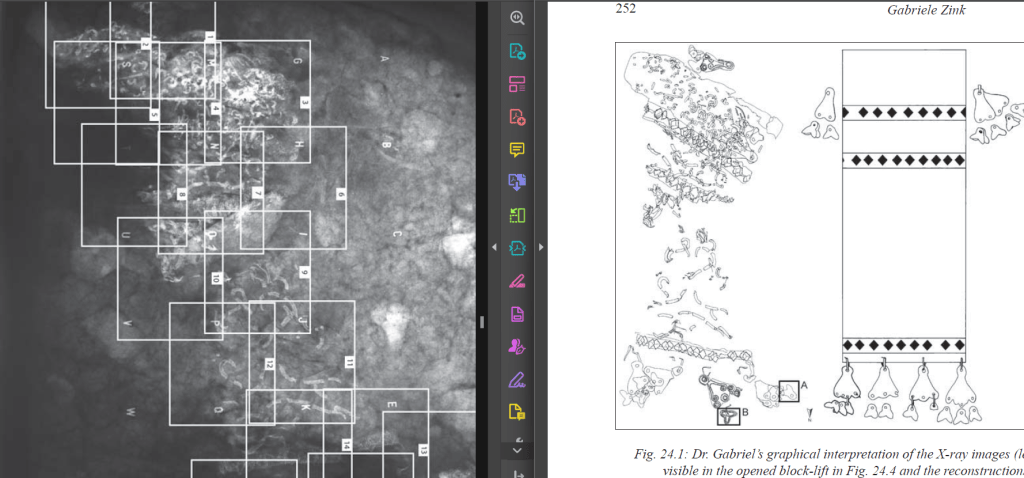
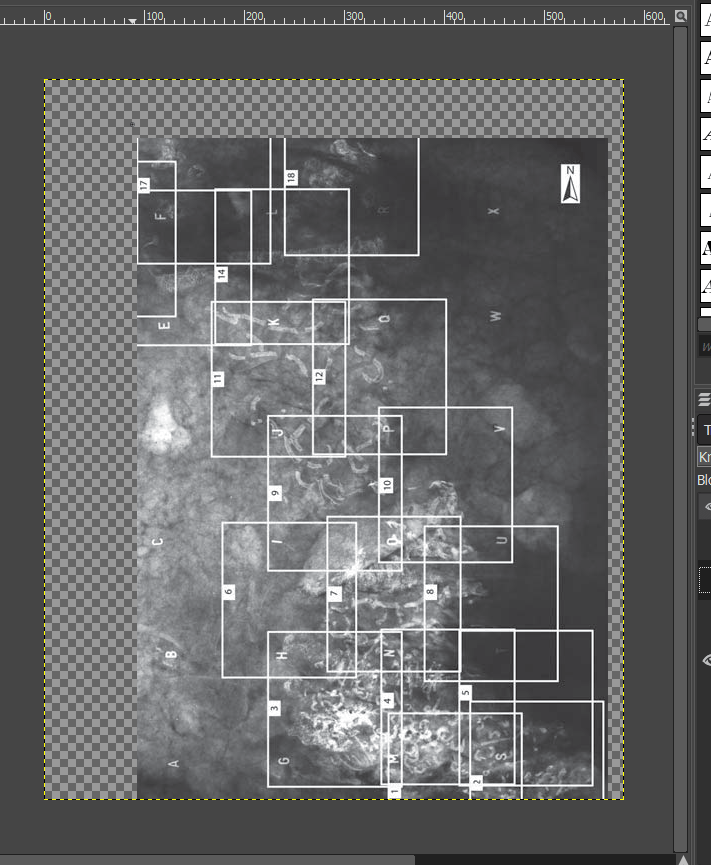
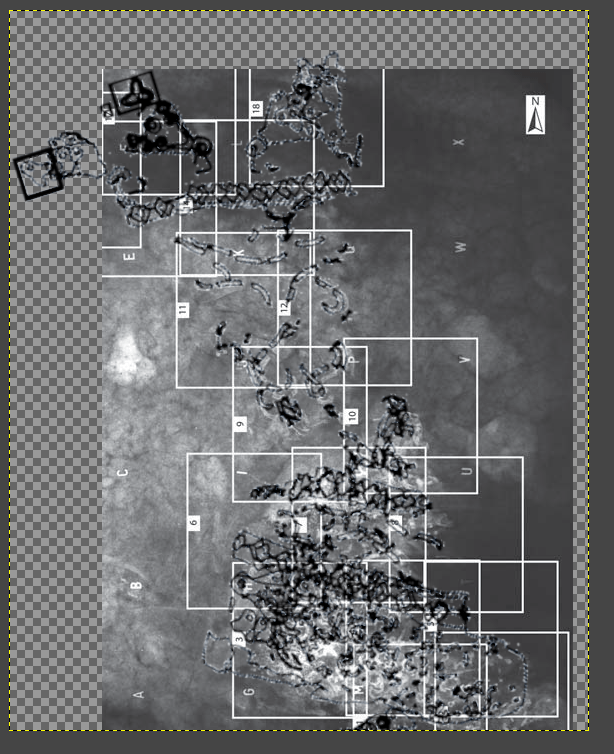
So we have a bag with 3 tablet woven bands, brocaded with a diamond pattern. The x-ray shows the brocading only covers the diamonds (not edge-to-edge, like on most early medieval bands). The brocading thread can be seen on x-ray between the diamonds, probably on the left side of the band (educated guess).
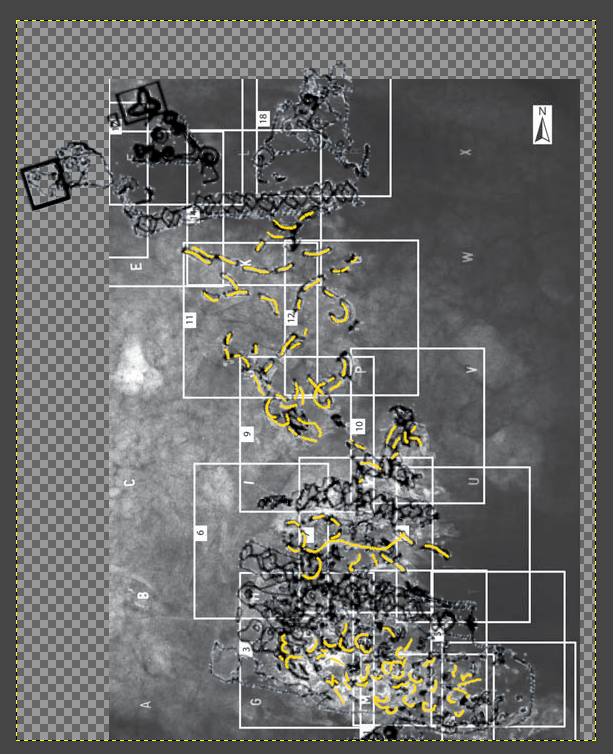
There was also probably some kind of gold thread embroidery, but it is VERY strange, that the remains of this embroidery look like remains of a bullion embroidery – there are multiple short pieces of the gold thread, instead of longer parts. Even if only short pieces were on the right side of the fabric, the x-ray should show bigger pieces. Also the remnants of the embroidery are much thicker than the brocading gold-wrapped thread.
Example of a gold-embroidered reliquary from XthC Germany [access 11.07.2023]
Example of gold embroidered reliquary from XIthC Germany [access 11.07.2023] – this reliquary has elements that could explain the state and shape of embroidery thread remains:
1. the vine embroidery thread could be cut by the tie-downs
2. the braids’ tie-downs cutting them could explain the s-shaped pieces at the top of the reliquary
 alicja jaczewska